 By: Grace Cook Wethersfield High School is putting on a production of Our Town, a play by Thornton Wilder on November 10-13 in the WHS auditorium. Our Town takes place in 1910’s Grover’s Corner, New Hampshire and explores George Gibbs, Emily Webb, and their relationship together. Their relationship, which grows from friendship to romance and ultimately ends up in marriage, is meant to teach the lesson that we live life without appreciating what it really has to offer. This play won’t be the exact same as the original though. Senior Aidan Cook, who plays Constable Warren, had this to say about the changes made: “I think the audience will appreciate the changes that we added to the play so that it's more like our town, like Wethersfield”. Cook wasn't able to share the specific changes that were made, but he did give us a hint about what the play will look like. “All of the props are imaginary”, he said ominously. The drama department is looking forward to drawing in large crowds. Liv Hammer, who is also a senior and plays Joe Crowl Jr. said, “This is a play about ordinary people and it shows an ordinary life so it can reach all audiences.” The students and teachers who are part of this production have been working tirelessly and they are excited to present the show. Tickets will be available to purchase soon. Our Town will be performed on November 10th to the 13th in the WHS auditorium. You can purchase your tickets here to enjoy the show!
1 Comment
 By Gabriella Szwed and Vanessa Venditti
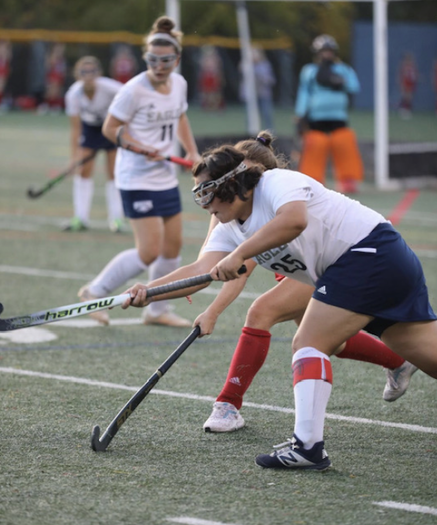
In sports teams, captain is a title given to a team member. The title is considered honorary, but in many cases, the team's captain holds significant responsibility for strategy and teamwork on and off the field. Leadership, positivity, and responsibility are just a few of the meanings behind wearing the armband; being selected to wear that armband is a whole meaning in itself. At WHS, each captain may have a different definition of why they wear this title proudly on their arm, but all passionately play their sport to win. When senior captain Bella Tomaino was asked what being captain means to her, she said, “Showing up on time every day, being someone to look up to but also putting all the setbacks in my own life aside for the good of the group.” WHS senior football captain Evan Christian talks about his ideas going forward with the football team and how he has contributed to the sport to make the varsity sport a comforting and safe environment for all of the athletes on the team. "Demolish, destroy, and demoralize" are the three words Evan says the team goes by. Being at least ten minutes early to practice every day is crucial to being captain. Additionally, Evan attends captains' meetings at least once a week after their hard-working practices. "My three captains and I talk with our coaches on how we can improve together. I then go and try to spread this energy around to my teammates," Christian said. Athletic Director Mr. Maltese has watched many athletes playing a varsity sport establish a name for themselves. He speaks of captains he has witnessed grow and what many continue to do for the athletic program here at WHS. "Usually, [captains are] seniors or upperclassmen that I can go to and use to help communicate things, help spread word within the program, as well as using them as contributors for things to run smoothly." Captain holds an honorary title at Wethersfield High School, meaning that these varsity student-athletes go above and beyond to ensure that their teams can be successful. At the end of each season, these captains will have made an extraordinary impact on all their teammates, changing them for the better. 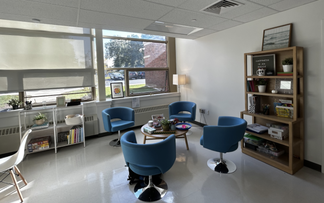 by Maria Charry and Michael Glushko
The Wellness Center just opened and it’s here for students that need to recoup and recover during the school day. Whether you need to fidget or you just want someone to talk to, the WHS Wellness Center is for you. The Wellness Center is run by school counselor Mrs. Conoscenti and social worker Mrs. Kremer. “We wanted to create a space where students can come, work on something that’s going to actively calm them down, and get them ready to go back to class.” One of the great things that the Wellness Center provides is just a place to talk. Everybody needs someone to talk to at some point and many might not feel comfortable doing that in class, if your school counselor is unavailable, you have the option of talking to Ms. Conoscenti and Ms. Kremer or your fellow students. “We just wanted to make sure that kids weren’t being missed, so they weren’t hiding in the bathrooms, and that they weren’t going home unnecessarily. That they had a space where they could regroup and return to class,” explained Ms. Kremer. The Wellness Center provides students a community in which they can be open and comfortable around others. These fifteen minute breaks let you take a breather from school and it is a great alternative to going in the bathroom or just straight up leaving school. Also the Wellness Center provides you with great strategies to help your mental health, like coloring, journaling, socializing with others that might be feeling the same way, guided breathing, and making bracelets. Another great resource that is provided is the Wellness Group, which is hosted every Wednesday. You can sign up for these thirty minute sessions by either stopping by or scanning the QR code posted on the walls around the school right next to the posters which they have put up. The first Wellness Group is currently set up and running, but there will be other opportunities to join throughout this year. Groups are 6-8 weeks long and meet during rotating periods so that you don’t miss the same class twice. “We had 44 students come in on Monday and 55 students come in on Tuesday.” Answered Ms. Conoscenti to my question about how many students are accessing the Wellness Center. If that number turns you off, don’t worry because the Wellness Center has two side rooms which you could find more privacy, but if you’re someone with social anxiety, then definitely try practicing socializing with others while you stay there, it could definitely be place where you learn to control that anxiety and then take those practices to busier places. I definitely do recommend that you check out the Wellness Center at least once. It’s one of the most comfortable rooms in the school and is a great place to just sit down, maybe do one of the puzzles that they have or play around with their fidgets. 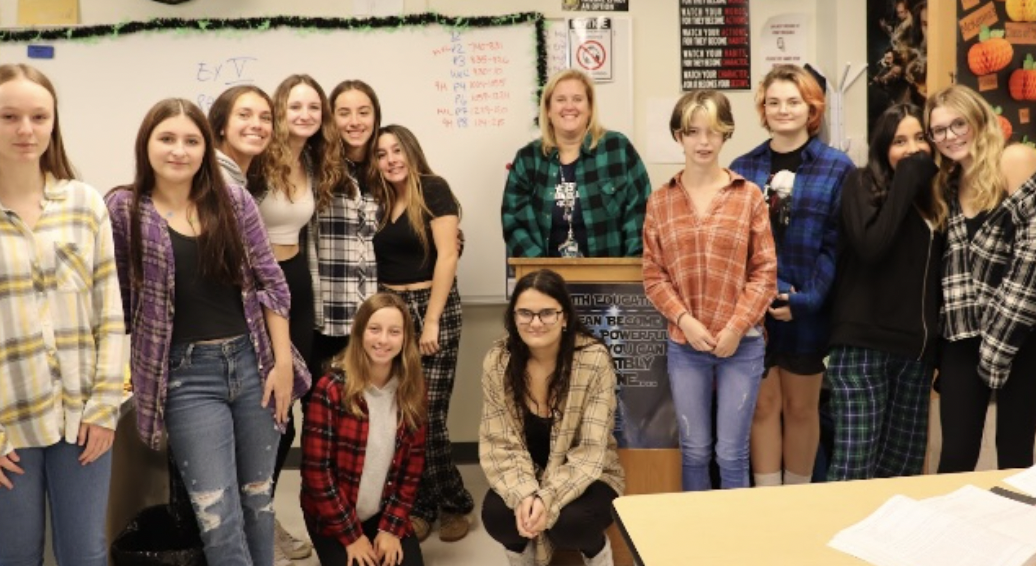 Mrs. McKenna's class in their Flannel Day attire. Mrs. McKenna's class in their Flannel Day attire. by David Nerenxa and Karlee Ellegard No one knows school spirit like the staff and students at WHS! This week, we had our annual fall spirit week where everyone dressed up in a specific theme for that day. The themes for each day were; Monday: Flannel Day, Tuesday: Neon Wars, Wednesday: Pink Out, Thursday: Anything but a Backpack, and lastly Friday: WHS Colors, which ended this great week with a pep rally! We interviewed Kelly Vallera, a senior at WHS, to see what she thought about spirit week, and she had a lot to say! “I loved spirit week, there was so much school spirit!” she said, “The themes for this spirit week were so much fun, however, I only participated in flannel day, pink day, and eagle colors day.” The reason for this being that she didn’t have the right attire. 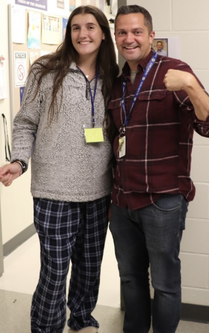 Senior Dylan Romagnoli participated in the games that they had at lunch, saying “I liked it because you got prizes and they were fun.”
One of those games he played was, “What would you do for a Klondike Bar?” He answered a question and won a Klondike bar for answering. Another one he completed was where you have a fruit roll up race with a friend. We also interviewed LMC specialist Mrs. Harding and she said, “Spirit week was so amazing! Honestly, I was super surprised that students along with staff participated. Usually, no one ever does, so to see WHS actually have school spirit is just wonderful!” She also stated, “I loved pink day, it was definitely my favorite. I just wish I could’ve participated in more days. Overall, it was such a blast and I’m also glad we ended this week with a pep rally.” As you can tell, students and staff had such a great time participating in spirit week. Everyone, including us, loved spirit week and if you’re reading this and are contemplating whether or not you should participate in an upcoming spirit week, DEFINITELY DO!  by: Kevin Peling and Kian Huynh
Since the pandemic, streaming services have been on the rise. Hit streaming services like Netflix, Disney+, Hulu, and many more services have put cable tv on the back burner. Companies make more shows and make more money, thus being able to make better and more quality shows giving viewers more choices. Since there is a plethora of shows and entertainment these days, it raises the question: What are people watching? Due to COVID, there has been a significant increase in steaming sales at a record-breaking pace. Since 2019, there has been a 30% increase in sales for just Netflix. Other streaming platforms like Disney+ have grown to be making $19.2 billion in just 2 years. In an interview with senior Colin Shanley, he talked about a show called “Vikings” on Prime Video. It is about Vikings traveling around the world, conquering the land. Colin likes this show because, “It's a very interesting show with lots of action and little to no filler episodes.” He also said, “There is always something going on in the show.” He likes to watch shows with his family on the weekends. We also spoke with Owen Carey, a junior at Wethersfield High School. In our interview, we talked about his favorite show called “Rick and Morty.” He said he enjoyed the “explicit” and “hilarious” jokes. Owen uses Hulu exclusively saying, “Ads shouldn’t be on TV or streaming services” I took his word for it as he watched Hulu for 12 hours in one sitting with not a single ad in sight. In another interview, we interviewed Ms. Cerderia, a student teacher for Mr. Martin’s journalism class, we talked about what shows she watched recently, some of these consist of “Riverdale,” “Bridgerton,” and the most recent season of “Stranger Things.” She says she watches “Only two hours, in my bed with my laptop.” As a college student who is focusing on studies, this isn’t too surprising. Senior Kyle Smith is also an avid TV watcher. His favorite show is “The Office.” During the interview, he said that he enjoys watching the comedy because, “I enjoy the cast and the plot line of the show.”He also said “I watch TV when I’m doing homework or washing dishes.” He spends roughly 20 hours a week watching TV in his room. Overall, these students expressed how they enjoyed using streaming services. Is streaming services the way to go now? Write down in the comments if you prefer cable TV or streaming services and what you’re watching. With Teacher Appreciation Week, WHS journalism students wanted to take the time to write about some of the teachers that have made an immense impact on them across their years. I hope you enjoy reading their words just as much as I did. --Mr. Martin  First and foremost, every teacher in Wethersfield High School is great in their own way. There are a couple of teachers that stood out to me the most during my four years in this school and they are Mr. Galivian, Mr. Sikora, Mr. Martin, and Mrs. Fitzgerald. Mr. Gallivan, I want to thank you for putting up with my annoying behavior when you had me during my sophomore year. You are one of the most determined teachers I know that has the ability to put up with kids who slack and try their best to be annoying. Sadly, our time together was cut short due to covid but every day I spent in your class trying to be funny and not doing my work. I'm glad you pushed me to pass English class and I would go back in a heartbeat to have you as one of my teachers again. Mr. Martin, I’ve known you for a little while now and I’m taking your class right now as we speak but you have impacted the way I want to strive for the better. You’re one of the four teachers that is always putting up with my attitude and you have the best comebacks and sarcasm of all time. But I really want to say thank you for taking the time to not get frustrated at every assignment I turn in late or when I don’t try. Instead of getting frustrated, you channel your somewhat frustration into helping me turn in my assignments, helping boost my motivation to get your classwork and other teacher’s work done, and lastly helping me have great motivation to graduate. You are a blessing to the staff and students of WHS and I will never forget the things you have taught me when I am done with High School. Mr. Sikora Never in my four years of high school have I failed your class but you did inspire me for lots of things. We both know I’m a lazy kid and hate doing assignments but during your classes and assignments, I feel like I can have fun and be more like myself when I am in your classroom. I like how you aren’t judgy. I discovered my passion for construction when I took your construction class last year. Thanks to you I will be able to do what I love after high school without making a million decisions about what I want to do with my life. You showed me that even working hard and getting stuff done can be fun as long as you’re determined and passionate about what you want to do. Whoever has you next in the incoming years of high school will have fun with you. Stay cool. Lastly, I want to say thank you to Mrs. Fitzgerald for always keeping me well organized. Whenever I would say I can’t do something because it’s late or it’s too late to pass the class you gave me the motivation to try and push myself past my limits so I could pass my classes. I like how you checked in on me every day whether it was for school or how I just was mentally and physically. You have been a lot of help in my path to success in passing class and school and for that, I will forever be grateful and thankful. -Carlos Vazquez During my time at Wethersfield High, I have had at least one conversation with every teacher. I've built very close relationships with a bunch of these teachers too. So picking one and writing an article about them is impossible for me. I can't pick just one teacher. All of these teachers have shaped me. If you had told me at any time in my life before my sophomore year of high school, that I will be going to college as a physical education major to become a physical education teacher I would not believe you. Before high school, I hated school. I never did my work, I never knew what was going on, I never listened but most importantly I never cared. I had zero motivation for school or my life in general. I had no structure, no direction, no help. At Least that's what it felt like. During the beginning of my freshman year, I was failing the majority of my classes and was struggling both inside and outside of school. I wasn't the person I wanted to be and I didn't have the motivation or structure to be better/be that person. I can't pick favorites, I love and appreciate each one of the teachers, students, and staff members that go to this amazing school. Being that I want to be a teacher myself I have pulled pieces and philosophies from everyone I have talked to build my own. I am beyond thankful for everyone in our great community, the lessons I've learned from them, the memories I've shared with them, and most importantly the growth that I've gained from them. I really can't put into words how grateful I am but I attribute any and all of the success to the people around me. As I said, I'm beyond thankful to everyone here and I can't pick favorites. But one teacher I really want to say thanks to is Mrs. Blanzaco. Without Mrs. Blanzaco I never would have gained the motivation to succeed or find what makes me happy. Without her, I would still be failing and I have no idea where I would be. I just know it wouldn't be a very good place. For those who do not know Mrs. Blanzaco is a tutoring teacher at Wethersfield High. She goes above and beyond to help people. Not students… people. She builds genuine relationships with everyone she meets. You can tell she is not working here to get paid, she's here because she truly just wants to help people, and that is exactly what she does. Mrs. Blanzaco got me on the right path. There is no value in what I've gained from her. But thank you Mrs. Blanzaco. For turning a stubborn, immature, mess Into what I want to be, something greater than myself. -Aidan Budaj One of the most hard-working thoughtful teachers I have met here at WHS is Mr.Miller. I have just met Mr.Miller this year for Pre-Calc. He doesn't teach in any really crazy way, or he doesn't just crack jokes with students the whole class. He teaches the lessons, and makes some jokes here and there- but for the most part, it's pretty cut and dry. The reason I want to write this appreciative letter for Mr.Miller is because of his heart. And what I mean by this is I think Mr.Miller has a really big heart. My class for Pre-calc is wild, and it would probably be an understatement. My class can be really rude sometimes, sometimes we don't pay attention (myself included), a lot of the people just don't really care. Now a lot of teachers can probably claim this as well because as students we can be all of those things. But what really moves me about Mr.Miller is the fact that he continues to show up every single day with the same positive attitude and the same goal/drive to help us learn math. And yes, obviously, he has gotten mad at us a few times when we have pushed his limits- as any teacher should. But also the fact that on every single test, when those same students don't care about a single thing that Mr.Miller is teaching every other day with the same energy, he will always help them the best he can. This caught me by surprise the first couple times he did it. I would say to myself, "why is he helping these kids, they don't give him the time of day during regular classes." Now I wouldn't given it a second thought if he would just play it off and say something like "Well that's what we were learning about last class when you weren't paying attention." And I think that would have been completely fine because those kids didn't deserve it in my opinion. Why would Mr.Miller help them? Why? That's when I thought to myself, he does it because that's what teachers do. -Anduei Xhelaj The most inspiring person I’ve met while here at WHS has definitely been Mrs. Duggins. She has only been teaching me for a year but I have known her since my freshman year. She has taught me life lessons about our history because she wants us to learn about how we began and how many things have changed.Mrs.Duggins is one of those people that you see way more than a teacher, she is a mother figure and inspires me to want to do more in life. She isn't just there to tell her students about WWI or WWII or The Civil Rights Movement, but she also connects herself with each of her students to make sure they’re okay in school and outside of school. She is bright and strong and cares so much about her students like they are her own children, and she wants everyone to graduate and do big things in the future. Mrs. Duggins loves her history class even though it might be challenging at times. Even though we as students might be challenging to deal with, seeing Mrs. Duggins' energy and her bright smile always brightens everyone's day. My grades have always been great in her class because she makes it interesting and fun, even though it is in the morning. I saw Mrs. Duggins yesterday and she had a talk with me because I was in a messy situation with an old friend. And she told me that I'm not a bad student and to hear that I might get in trouble made her upset with me. So we had a sit-down talk and she made me realize that the situation was really not important and I shouldn’t be interested in it. She is a very strong black woman and mother and I aspire to have the same mindset as her. She is a great teacher and an awesome person. Thank you, Mrs.Duggins. -Shannon Menns To continue reading our Teacher Appreciation Week posts, click the "read more" button!  The weekend of March 13, the WHS Drama Department put on their annual spring musical with their performance of “Cinderella.” Across the three performances, students wowed with their acting, theatrics, singing, dancing, and hard work. This is just a small account of the experiences of the audience and the cast and crew.
Katie Lombardo, Junior While watching the musical, I had a smile on my face throughout the entirety of it. It was funny, yet heart-warming at the same time. It was truly a beautiful experience, would love to see it again. Christian Bonvisuto, Junior A wonderful Cinderella story from start to finish. Great acting by each and every one of the actors. Beautifully choreographed, amazing music, costumes, and dances. Had a great time going with my family. Gabriella Cicero, Junior It was great to see this Cinderella musical. You can clearly see the hours of hard work and dedication that went in through the songs, dances, and music from the actors to the musicians and backstage crew. Abigail Montes, Junior As one of the pit members of the musical, it was the best experience I have had as a musician. To go through multiple practices and repeating songs to get the cues just right, it helped me grow a lot and learn more about the music world. Adriana Cruz, Senior WHS drama club has put on yet another amazing production. This year’s performance of Cinderella had beautiful singing, phenomenal costumes, and incredible actors/actresses. This musical was enjoyed by all ages and was a great way to spend the weekend! Erika Mayzenberg, Junior I went to the understudy show and I was extremely impressed with how the cast did. They really brought out the characters they were playing and even without a lot of practice for their parts, they were able to put on a funny, exciting, and absolutely spectacular show. Holden Escabi, Junior Watching Cinderella, it was clear just how much hard work and talent went into the show! The whole production had great energy and was a reminder of the amazing things that the WHS community is capable of achieving. Gabriella Szwed, Junior I was able to make the understudy portion of the play on Tuesday and all of the characters were so talented. I thought that it was very impressive how they were able to put on a full play before the final show with all of their lines memorized and dances learned. Megan Lipka, Junior The WHS Drama production of Cinderella was amazing! The acting and singing were amazing and the dance numbers were really cool too. The Prince is Giving a Ball and Ten Minutes ago were two very cool numbers in the show. Also, the pit and the backstage crew were pretty cool too! Sarah Wrona, Junior I enjoyed the show, especially seeing my friends on stage and hearing everyone sing. My favorite parts were watching the dress transformations and watching the remote control mouse hit a prop and then go back off stage. Vanessa Venditti, Junior I thought the musical itself was really good, I liked how they took the stage to our seats and I thought the slide behind them changing settings was cool and easier. Found myself laughing at some of the lines which were good. Only thing is, I was looking forward to seeing if Mr. Pfister is a good actor... wanted more from him. Kareena Khadar, Senior The school play was a wonderful production of the classic tale Cinderella. The cast was energetic and full of spirit. It was a great way to spend time with friends this weekend and I was especially blown away by Mia Sommer's and Olivia Krout's Voices Karima Hasan, Junior This show was super fun and I got so much closer with my friends and we became a little family. It was a lot of work and super hectic but it helped build a lot of skills from balancing school, work, and rehearsal. Charlotte Daigle, Junior Being in this show is such an important experience because we become such a tight group because we are with each other all the time. We are bonding over the inside jokes and hanging out just singing songs from the show. The people in the show became my closest friends, it made me feel like a family and I will miss it so much, I can't wait for next year. Angel Sotelo Sanchez, Senior This was the first play I attended and I really liked it great voices for singing. Samantha Coty, Junior This was my 5th production overall with WHS (I've been in two plays, this was my second musical, and a cabaret), and it was an amazing experience. Being Madame (although I felt was slightly typecasted, thanks Roets) was such a fun experience, because I got to be funny but at the same time let out some anger. I think the entire cast did an amazing job, and I couldn't be more grateful for the time that my castmates, crewmates and staff have spent putting on this production. I think we did an amazing job, and I'm so proud of all of us. Thanks to everyone who came out to support us!  by: Taylor Moran
WHS junior Erika Mayzenberg, vice principal Mrs. Tara Yusko, and delegates from the Wethersfield High School chapter of Amnesty International have teamed up to raise funds for medical supplies to send to Ukraine. Donations are being collected every day during lunch, beginning Wednesday, March 9th, at a designated table in the cafeteria. Individuals who donate will be given a blue and yellow pin, representing the Ukrainian flag. When asked how wearing pins can benefit the effort to support Ukrainians and Ukrainian students at WHS, Mrs. Yusko said, “I think it’s important to acknowledge the emotional toll, and sometimes physical toll, this is going to take on people, and just having a visual to say, ‘We know and we understand.’” WHS junior Erika Mayzenberg has special connections to the cause. “I was born in Ukraine, and I immigrated to America in 2010.” Erika went on to say that she has been keeping up with updates about the war and she is passionate about contributing to the effort of helping her home. Mayzenberg said, “I don’t have any political power, I don’t have anything, but the most we can do is just help organizations that are willing to help the cause to help Ukrainians.” Erika and her mother have researched and been helping the local organization Maidan United, which is where Wethersfield’s donations will be sent. Maidan United, which is based out of Hartford, Connecticut. Since being founded in 2014, their mission has been to support Ukrainian citizens impacted by Russian attacks. Today, the organization is using cash donations to contribute to the purchase of medical supplies, including but not limited to knee braces, antiviral drugs, first aid kits, and medical scissors. On top of donating cash gathered at WHS, Maidan United has an Amazon Wishlist accessible through their trending Facebook page. While donations are immensely appreciated, leaders of the effort understand that not everyone can afford to donate. “Just supporting the work, right, and helping us spread the word, especially if you can’t donate, would be wonderful,” says Mrs. Yusko. Wethersfield Athletics has also published information about volunteering at the Ukrainian National Home of Hartford to help move items. If interested, call (860)-256-5702. Moving forward, make sure to stop by the designated lunch table in our cafeteria to donate to Maidan United, and wear your Ukrainian flag pin with pride. See Maidan United’s Facebook page for more information. https://www.facebook.com/maidanunited/ Wethersfield High School’s National Art Honors Society is gearing up for a grandiose art exhibit.3/14/2022  Scholastic Art Award Winner and member Greta Dalton-kay shares a snippet of her work. Scholastic Art Award Winner and member Greta Dalton-kay shares a snippet of her work. By Sarah Gurskis and Tea Tola
To celebrate Youth Art Month, Wethersfield’s National Art Honors Society (NAHS) has its members (ranging from grades 9-12) creating and displaying their art for the annual art exhibit. From pencil-and-paper to digitally-created iPad creations, unique art mediums will be put on view for the school to view and appreciate. The creative-driven members have been working hard on their pieces, and are excited to show what they have made. The event will be located in the WHS art exhibit right outside of room 20, and the art will be hung between the dates of March 21-24. Vice President Andrea Moyano shares her ideal piece in the show: oil pastel. She is looking forward to seeing this medium skillfully used on a canvas due to her lack of knowledge of the medium. “It’s going to be a variety [of art pieces],” event planner and advisor Andrea Haas said. “It’s going to be a variety [eclectic] vision of the different, individual members.” Members of NAHS are eager to express themselves through their artwork, saying that there is more to their art rather than just a still display. Senior member Martina Carbone says, “Art is a language for some. It’s their outlet to how they communicate their views on the world.” Fellow member Alex Jara says, “Art shows what I’m thinking and it reflects on my personality.” Collectively, members agree that their artwork is meant to embrace the views of those who depend on their artwork, and to be heard is something to be celebrated. The artwork displayed will mainly be by the junior and senior class, with underclassman art sprinkled throughout the exhibit on March 21-24 outside of room 20 If you are interested in joining the National Art Honors Society, a fee of ten dollars is required and will promptly be donated to all NAHS future activities. See Mrs. Haas in room 20 for more details.  by: Lexie Rodrigues, Arianna Shink, and Evan Munger
Come see Wethersfield’s Drama Club production, a spinoff of the classic play Cinderella, on March 11, 12, and 13, 2022 in Wethersfield High School’s auditorium. On March 11 and 12, the play will go on at 7:30, however on the 13th the show will begin at 3:00. Tickets can be easily purchased online at https://www.showtix4u.com or can be purchased at the door with a slight increase in price. The picture above shows how the play is advertised, you will see these posters posted around the high school or even around the town of Wethersfield. Director/teacher- Mr. Roets explained how this version of Cinderella is not your typical Disney fairytale. There are four different versions of Rodger and Hammerstein's Cinderella, this play is the latest one to be released. He went into more detail about how this version is different, for example he states that only one of the step sisters are evil instead of both. In the play, you will see the actors sing and dance. A question we asked Mr. Roets was “What are you most excited about?” and his response was, “It depends on any given day, something else is different in a great moment, like lately it is the song ’A Lovely Night,’ which is about step sisters, step mothers, and Cinderella.” There are many different reasons why you should come see this play. Our actors will be performing dances which, according to Mr. Roets, “it is funny to watch men dance”. There are going to be amazing special effects but we do not have any specific details for the reason that it is supposed to be a surprise for the audience. Therefore, if you would like to see some cool effects please come and be a part of the audience! Our drama club is going to try to make this play very believable and give their audience real emotion. There are going to be three real kissing scenes throughout the play which Wethersfield High School has never done before, that will be exciting to see. Over this weekend if you are in the mood to watch something, come down to Wethersfield High School and watch this beautiful play. You can purchase tickets for Friday, Saturday, and Sunday’s shows at www.showtix4u.com  By: Nicole Partridge
Wethersfield Youth Recreational Basketball, a program that has existed for decades is a great way for 7-8th graders to get out and play a sport. Not only does it benefit the kids, but it also allows high school students to give back by coaching the kids. For the 2021-22 season, many teams competed to try and bring home the first place championship shirt. The winning team, coached by Nick Farrelly along with assistant coaches: Ben Caulfield, Dylan Romagnoli, and Evin Adhin, had a season going against all odds, they lost to the team they played in the championship 4 times previously. A team coached by 100% high schoolers, faced adult coaches that have been coaching for years now. They were also the underdogs, they weren’t supposed to have the tremendous season they did have. Farrelly said, “This might be the last game you’ll ever play for basketball, at least organized, leave it all out on the floor.” While they were coaching, they learned just as much from their athletes. Farrelly said, “They taught me that I really enjoy coaching and that I really want to coach in the future.” While he is possibly looking up to the age group he coaches, he will never forget the kids who taught him that it's okay to coach loosely and that sometimes winning sprouts from focusing on having fun. Other coaches, Joe Bellas for one, learned life-long lessons from coaching as well. Bellas said, “I learned how to grow and improve as a leader by learning from my players and working to create a fun environment.” His team also had a pretty successful season. Aside from the coaches and players, fans had a great time at the game. Friends of the players had formed a student section of their own, cheering on their classmates. Junior, Ava Healy, supported the coaches at the championship game. Everyone knew this championship was a very important thing for the kids. Healy says, “I felt a lot of pressure for them [the kids], I knew this meant a lot to them.” The middle schoolers endured the stress, excitement, and more that they will go through in future years. When asked if she would consider coaching she agreed enthusiastically with, “Most definitely. Nick [Farrelly], Ben [Caulfield], Dylan [Romagnoli], and Evin [Adhin] really inspired me to want to start coaching.” This shows not only does it change the kid’s and coach's lives, but spectators as well. Recreational basketball is a great activity, no matter if you are in 7th grade looking to play or high school looking to give back, or even spectating! This is definitely something anyone should look into, you never know what you may learn.  NY Magazine NY Magazine by: Nickolas Nasse, Colby Quinn, TJ Mayfield
Just a few months short of the two-year mark of the CT mask mandate, CT schools are finally able to make a decision on whether to wear a mask or not. Wethersfield public schools announced that beginning February 28th, 2022 that they will be moving to a “Mask recommended setting” per superintendent Michael Emmet. This decision brought a split between two major sides that split the school, if not the nation. With cases staying at steadily under 3%, students and teachers of most Connecticut high schools are moving to make masks optional, removing the mandatory status for masks inside the school environment. Dozens of Connecticut schools such as Wethersfield, Enfield, Newington, and Glastonbury would be going mask optional, but other districts such as Hartford, Bridgeport, Waterbury, and New Haven look to continue to make masks mandatory in schools even after the ability to make it optional. With masks worn for almost 2 years within Wethersfield schools, both students and teachers both are relieved that masks are finally optional again. “Personally, if I don’t have to wear one [mask], then I’m not going to wear one,” said WHS senior Sean Dunn, who had chosen to not wear his mask in school. “Masks have been keeping us safe for almost two years,” WHS teacher Mrs. Mucinskas explains how masks are key to keeping people safe in schools but had decided to fluctuate her decision to wear a mask based on the positivity rate. Although, for other teachers and students, they may choose to stay masked because of preexisting conditions, family situations at home, or general comfort level. It’s simply important to respect others’ decisions and move on. Students and teachers of WHS were asked for their thoughts on masks and the overall whole COVID situation. Mixed results were found all over the school in the perspectives of both teachers and students still being split on masks, as well as for the parents of students. “I really wear it [a mask] because my mom wanted me to wear one,” said Junior Annabella Cartiera in response to why she wears her mask in school. Statistically though, since masks were made optional for schools around Connecticut, positivity rates have not spiked or fluctuated upwards in the mere two weeks CT schools have been mask optional, keeping positivity rates between 2-3%.  Source: iStock Source: iStock by: WHS Journalism Students A note from Mr. Martin: With this week marking our Thanksgiving holiday, I wanted to give students the space, time, and opportunity to speak to those both in and outside of the school community in a show of gratitude. Please read, enjoy, and have a wonderful Thanksgiving weekend. I'm thankful for my sister, Abby. She is able to make me laugh when I am sad and is always willing to watch a movie with me. She is so fun to be around and understands my humor unlike anyone else. Thank you, Abby! - Ella Alger I am thankful for Mrs. Fitzgerald. She has helped me since freshman year to make sure that I pass with good grades. She has always helped me and was willing to help me before or after school as well. Thank you for your hard work and gratitude. -Joey Calafiore I am thankful for my parents because they help me with anything I need help with and they teach me things. My dad and I do projects together and he teaches me about the different tools. Thanks, mom and dad. -Jordan Schenkel I am thankful for Mrs. Becker. Not only did she grow my love for Italian culture, but treated myself and fellow classmates as much more than just her students. She is that one teacher I feel I can turn to when in need of advice or simple words of encouragement. So, thank you Mrs. Becker for all you have done and continue to do as the amazing person and teacher you are. ~Lena Uccello I am thankful for Mrs. Niemic. Though I've only had her as a teacher for four months, it is so easy to tell the kind, generous and warm hearted person she is. The way she is understanding and patient with her students is a wonderful quality and one that can be hard to find. Psychology may be hard to learn, but somehow, in someway, Mrs. Niemiec has a way of making it fun. So, I thank her for constantly resonating positivity within the classroom and bringing light into each and every day. ~Lena Uccello I'm thankful for Mr. Sand. He makes his students feel like family and creates a safe environment where everyone's free to experience the way they feel. His jokes are always good for putting you into a good mood and he is an all-around amazing guy. -Annika Brown I’m thankful for my mom. She cares for me and checks on me every day even when she’s the one who I should be checking on. I don’t mean this with any disrespect; you can sometimes be frantic, but it goes to show your love for me. I’ll forever love you and will never be able to truly show you my full appreciation for you. -Brian Bianchi I am thankful for Mrs. Foley! She not only taught me a lot of school-related things but helped me out with lessons in real life. Mrs. Foley is always someone I can go to cheer up and have a good time. Thanks, Mrs. Foley! -Bella Tomaino I'm thankful for my family. My family has been with me through the good and bad times. They have made many sacrifices for me and my brother so we can succeed in life. And I am really thankful for this and to have them in my life. Thank you for everything mom and dad. -Shane Mazur I'm thankful for Mrs. Conoscenti. Throughout high school, she has helped me so much, whether it was with my schedule or any other issues. She has also been extremely helpful this year during my college application progress. Mrs. Conoscenti has guided me through this process and answered any questions I have had along the way. Thank you for all you've done, Mrs. Conoscenti! -Grace Lisella I’m thankful for my best friend, Sky. They are always there for me, at my best and worst times. I don’t know where I’d be without them. -Rae DeMonte I’m thankful for Mr. Moger. He always helped me whenever I needed it, and helped me to get grades I was proud of. He’s a great teacher and one of the best I’ve had. - Liam Stec I am thankful for everyone in my life. All the struggles I have endured and each person has had such a profound impact on my life. To my Dad, he has been my rock for life and the work he does for me brings me to tears. To my teachers and coaches, thank you. Mrs.Becker, Mr.Martin, Mrs.Troy, Mrs.Ryba you all have had an impact on me that words can not express. To Coach Bagdasarian by sticking by me during my worst times on and off the field. Thank you all. -Ross Tine I’m thankful for my family. They have been supporting me and unconditionally loving me for my entire life. We always stick together through good and bad times. -Alanna DePinto I am thankful for Mrs. DeGray. She is always there for me when I need someone to talk to and genuinely cares and listens to me. I can always talk to her about things that interest me like Marvel movies and my favorite actor Richard Madden. She is also an amazing teacher who helped me a lot when I had her junior year. -Yvonna Rodriguez I am thankful for the opportunities that soccer has given me. All through high school soccer has been a place to go whenever I needed to, I have met great people through the sport that have made lasting effects on my life and will continue to in the years to come. This year especially being a part of the High school team really showed the brotherhood and community that we built up throughout the year, if it weren't for soccer then none of these relationships and experiences would have been possible. Thank you soccer for all you have taught me and given me. - Michael LaPerriere I'm thankful for my classmate David Gregorian and him allowing me to have his Chromebook charger. Without his assistance, I would not have been able to complete my work in a timely fashion. He helped me in a tricky situation and I appreciate his assistance. - Liam Stec I'm thankful for my classmate, Liam Stec. I honestly never got particularly close to Liam but I knew of him and I knew he was a good stand-up guy but that was all. Recently he wrote a thank you letter to me about how I helped him recently. I think that just saying thank you for the little things in life goes a very long way. Thank you, Liam. -David Grigorian I'm thankful for Mr. Sand. Not only is he an amazing teacher but he makes every day better with his jokes and personality. U.S History was always my favorite class and the highlight of my day. We learned so much in his class, besides learning about U.S. History, we learned how to be better overall humans and show empathy. -Roshini Gopaul I’m thankful for my Journalism teacher Mr. Martin. I'm thankful for him because he's always full of energy which can make anyone's day better. He is also very understanding that students have lives outside of school, and is always willing to help. He genuinely cares about his students and passing his class. He can joke around and take jokes, which not many teachers and people can do. He also has an amazing shoe game. But overall, he is a very kind and nice person, and I'm happy to have him as my teacher. -Sydnei White I'm thankful for Mr. Baggs. Not only is he a great coach, but he’s also like a second father to me. When I was stressed out about the college process, he calmed me down and explained that I had plenty of time for an opportunity to present itself. I also know that I can talk to him about anything that doesn't relate to school or Baseball. I just believe that he's a very reliable and trusting person. Thank you, Coach! -Savier Paige I am thankful for my family, as is. They are the reason I have what I have, and how far I have gotten. It's just a simple thing like this, I am just glad to be here, and be alive. -Tej Ashworth I am beyond thankful for Mr. Spessard. Yesterday I won a state championship and the last thing on my mind was studying for my physics test the next day. But thanks to Mr. Spessard I had a note card to use on my test so I did not need to study and I was able to celebrate with my team. -Antonio Contreras I'm thankful for my family, always being there and always proud of me for the things I accomplish. Especially for pushing me to be my best and try my hardest. Thank you for everything you do! -Madeline Wickens I am thankful for Mr.Carr. He was my international studies teacher last year. Coming to school in September for the first time since March of 2020 was very nerve-wracking. I had Mr.Carr's class first period, and walking into his room on the first day and getting a big hello was reassuring. I was often the only student in the classroom while the rest of the class was learning from home, but Mr.Carr always made me feel welcomed! Thanks for everything, Mr.Carr! -Allie Leahy I'm thankful for Mr. Kess. I'm so glad I was able to have him as my computer science teacher and mentor while he was here at WHS. He largely shaped who I am as a developer, and what I learned from him through his CS classes and clubs is invaluable. Thank you, Mr. Kess! Wishing you a long and wonderful retirement! -George Zack I am thankful for Ms. McLaughlin, who stepped in as coach mid-season my freshman year and has continued coaching ever since. She has continued to push us in every single practice, which pays off both on game days and at competitions. Thank you again for everything that you do for our team Ms. McLaughlin! -Mady Ramsey Thank you for always understanding when you need a due date, and always allowing me to write about what I want. Thank you for being understanding. -Charles Martindale I'm thankful for my friends, they help me through lots of things and keep me up and positive. This year I'm glad I grew closer to them. Growing closer and hanging out with them more has been really fun and made new memories and can't wait to make new memories this year! -Chris Daley I’m thankful for the lunch aides. They prepare hundreds of meals for the school 5 times a week. They put up with all the chaos that is in high school lunch. If you treat them with respect they will do the same back for you. Thank you lunch aids! -Micah O'Donnell Im thankful for my mom because she is so helpful in any situation. She takes care of our family and feeds us every night. she also one of my best friends and I will cherish that forever. -Ava Chodorowski  Source: Pexels Source: Pexels by: Annika Brown
Here at Wethersfield High School, the students go to class, listen, and engage with their teachers, but no one ever questions why and how those teachers got to this point. I sat down with three well-known teachers and discussed the reasons they chose their profession and how they managed their way into the classrooms of Wethersfield High School. The first person I sat down with was Mr. Chatfield, who teaches Human Anatomy and Physiology as well as Integrated Science. When asked, “What made you realize you wanted to become a teacher?” Chatfield responded, “At a young age I fell into the role of being a teacher, as I had a younger sister who I wanted to help with everything.” He later goes on to say that in high school, he realized he wanted to be a teacher because he could “help people in the subject matter that he loves.” His goal was to be a role model and help others. He also went on to explain that he had thought of other career options like a vet, but ultimately that did not fit his personality, but to be a teacher he said, “you get to be nice, caring, you get to help others, you get too coach and it was just the type of environment I felt I could best fit.” In order to pursue this passion, he got his undergraduate degree in a subject he was passionate about, which was biology. Then he went on to further his education by obtaining his masters degree in education because as he puts it, “This was my way of saying, I really want to be a good teacher, and not only be the type of teacher that knows his subject matter, but be a teacher who reaches students and knows what to do, to be their best teacher.” He not only wants to be able to teach a subject that he is passionate about, but also reach students on a personal level and be there for them as a coach and mentor. The second teacher I sat down with was Mr. Sand. Sand teaches primarily upperclassmen in Civics and Current Issues. When asked, “What led you to want to become a highschool teacher?” His initial response was, “Uhhh, I have no idea.” Initially, I was confused by his response, but then he went on to explain that he had no intentions to become a teacher in high school or the first two years of college. He first thought he wanted to become a physical therapist, but then he said, “It kind of dawned on me that maybe this is something I should do. My dad was a teacher so it kind of just happened naturally.” I then went on to ask him “ Do you have a passion for what you are teaching?” and he said, “I have a passion for whom I am teaching. I try to use history to help kids grow, help kids be better citizens, and to help them with some of the issues they have. It’s all about the kids. Always.” Mr. Sand has a clear passion and love for his students and wants to improve their lives in any way he can. The last teacher I sat down with was Mrs. DeGray, who teaches America Through the Eyes of Women and Journalism. When asked, “What led you to want to become a teacher?” DeGray had said that she originally didn’t want to be a teacher. “Plan A was that I was going to be a Journalist. I was going to travel the world and be a reporter for a warzone, make a difference,” she saids. She later went on to say there were not many jobs available for what she was looking for and the jobs that were available, she would have to move across the country for. This was not something she was interested in because, as she puts it, “I had already met my husband. We were already engaged and trying to start a family.” Because of this, she started to volunteer here at Wethersfield High School. She helped several teachers with the school newspaper and technical things around the school. She goes on to say, “One day someone asked me, ‘Hey! Why don’t you go back to school and become a teacher?’ So I did.” She applied to the University of New Haven and did her teaching internship here at Wethersfield as a building sub. When asked, “Would you say you found a passion for teaching your subject area or the students?” Degray replied, “I think both because even though my background was originally in journalism and broadcast news, I was kind of on a stage wanting to inform people everyday, and I think that’s a lot of what teaching is. It’s helping others to recognize their potential.” She even goes on to say, “I feel like I'm on a comedy show trying to sell my curriculum and content in the most entertaining way possible but also trying to help kids realize their potential and what they want to do with their lives.” DeGray went on to say that she couldn’t imagine doing anything else but teaching. Her ultimate goal was not to be a teache,r but she knows that this is where she was meant to end up. DeGray uses her knowledge of literature to teach kids and try to inspire them in any way she can. These are just a few of the many teachers we have at Wethersfield High School. Each one of them had a different journey getting to where they are today, but what they all have in common is that they all care about the well being of their students and want them to succeed. Chatfield, Sand, and DeGray are all great examples of what it means to be an amazing teacher. 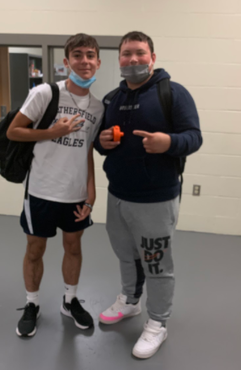 Dennis Gega (left), with senior Tyler Burgos. Dennis Gega (left), with senior Tyler Burgos. by: Andrew McDonough
Have you ever wondered what it’s like to move to a new country? In our own Wethersfield High School community, there are many students who have experienced the immigration process first-hand. Dennis Gega, a junior here at WHS, grew up in Rimini, Italy, and came to Wethersfield at the age of 13 in 8th grade. At first glance, Wethersfield was a foreign place to Dennis. Though the people seemed nice, the wide array of houses, neighborhoods, and roads designed strictly for cars contrasted deeply with the pedestrian oriented, apartment lifestyle Dennis was used to back in Italy. As time went on, and Dennis’s English developed, he would learn to adapt to “American culture.” When asked to discuss his overall experience in Wethersfield, he said it was “pretty positive.” He grew to like the area as a whole, and appreciated how people in town and at school were supportive toward his learning of English, and how everyone was quick to lend a helping hand. Dennis still misses certain aspects of Italy, such as the food. When asked to comment on American pizza, Dennis went on to rate “Frank Pepe’s pizza a mere 6/10.” It’s “different,” he said. He commented on the struggle to “observe” and model others' behavior when he was trying to figure out how to orient himself in our community. Learning how to speak, act, and even think like an American was something Dennis had to pick up along his learning process. While Dennis admired some nuances in American behavior, he did admit one key cultural difference that was somewhat of a shock to him, “People are more cocky in general in the US,” Dennis said. While he did note that there are benefits to having confidence, Dennis added that overestimating oneself was a quality that can have a negative effect. Dennis had advice for teachers in approaching new students, “Just treat me normally.” Dennis added that he wished some teachers would treat students new to this country just “like the others,” and not make so much of an effort to go easier on them just because they are new. If you see Dennis in the hall, make sure to say hi. He’s a great, funny kid, just make sure not to talk pizza. by: Christyan Cimino, Josh Barbara, and Chris Daley
School IDs, they are the big talk around the school. Do they have a purpose? Do they really work? Are they really keeping our school safe? We had an interview with Wethersfield High School Principal Mrs. Siobhan O’Connor and Head of Security Mr. Mike Baribault to discuss the ID rule in our school. We asked where the idea for IDs originated. “It got a really big push after the Sandy Hook tragedy and different school security and violence incidents that happened across the country. Because before then we had no way of identifying students that came in, ID policies went throughout the country to show who belongs at schools and who does not,” said Mr. Baribault Since then, WHS has been trying to increase the level of security in all schools and started with the IDs there. Mrs. O’Connor mentioned that she’s been wearing IDs since 1997 because of her job and that it will help us learn and get in the habit of having one in the future. In the student handbook it states, “All students are required to wear their ID on a lanyard on their person at all times.” As an eye witness in past years, students walk into school with different colored IDs, other kids IDs, and even other schools IDs. This is a real problem that needs to be solved. We are told that the IDs are for our safety, but if I can get into the school with an invalid ID, then who else can? The ID policy is not perfect, but WHS notices that and is making measures to adjust. This year, they made significant cosmetic changes to the IDs. This year they made the background color of them blue. Principal O’Connor said, “The IDs are blue this year so it identifies that you are supposed to be here this year. Some of the school shooting incidents were involved with students wearing IDs from past years that have gotten in.” We know that the kids don’t like to wear our IDs because “It’s annoying,” or “it doesn’t go with our outfit,” and Mrs. O’Connor understands that. She is not trying to harp on us too much because then we won’t want to wear them even more. The administration would like us “to play a part in your own safety and security,” said Mr. Barabault. It’s a team effort. To that, we started talking about what they were going to do to help fix these issues. They started to talk about how the IDs go much further than just to make sure that you go to the school. The IDs are also used just in case a tragedy occurs, the authorities can identify us. All we wanted to show in this article is that we may not show it but we care about the IDs, we want to be safe, and we want to help. We want to inform the students about what the administration wants to do and we want to bring the student’s opinions to them too. There needs to be more communication between us and then more will be able to get done.  Photo Credit: LBCC Photo Credit: LBCC by: Connor Swanson, Brian Bianchi, and Shane Mazur
The United States is currently going through what is being considered a mental health crisis. Over the past 8-9 years, rates of depression and suicide have increased steadily, with little outreaching effort to stop it. A teacher from the Wethersfield High School social studies department, John Sand, has been vigorously at work, trying to implement a way to help young adults in Wethersfield Public Schools system. These past few years have been an increasingly scary time, with now 4.58% of adults considering suicide. This number has increased every year since 2011-2012 and does not seem to be slowing down. This starts out in the youth years, and as a country, we would hope that there are people treating this and helping people with these thoughts but in reality, it is the exact opposite. According to Mental Health America, over 60% of this nation's youth with severe depression do not receive any mental health treatment. This is where Mr. Sand comes into play, he has reached out to each of his classes, figuring out who would like to come together to help kids in the school get the help they need. When asked about this group, Mr. Sand described it as, “An informal gathering of students interested in helping the school address the rising mental health crisis that is gripping young people nationwide.” He has support from Assistant Principal of grades 10 and 12, Tyler Webb. Webb has communicated with students as well, discussing ideas on how to improve mental health throughout the building. The Mental Health Group would be a great addition to WHS because it provides help if they are struggling with their mental health or they have ideas that could help others in the school. Especially with our generation suffering through the COVID pandemic, a lot of people struggle with mental health concerns. Mental health will always be a factor in our world and Mr. Sand created a group to limit this struggle with the students of WHS. If you are interested or would like more information, please contact Mr. Sand or Mr. Webb! 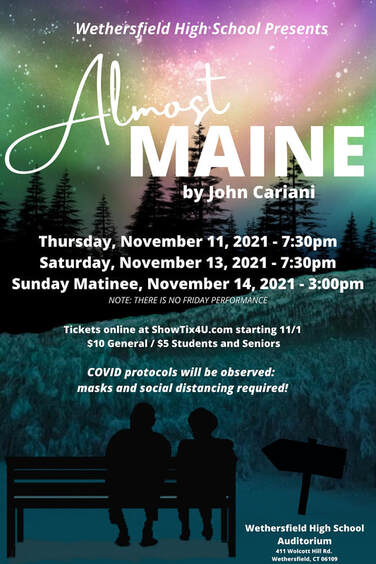 by: Roshini Gopaul and Maddy Wickens
Wethersfield High School’s Drama Club is producing Almost Maine this fall, which is running on Thursday, November 11 at 7:30 pm, Saturday, November 13 at 7:30 pm, and Sunday, November 14 at 3:30 pm in the auditorium of Wethersfield High School. After talking with Jeffrey Roets, the director of Wethersfield High School’s drama department and Almost Maine, we learned some interesting facts. “There are 9 scenes, and each scene takes place at the same time, a Friday night in January. It is all moments of awkward love. Each scene deals with the possibility of new love, the complications of existing love, envy, it has little magical realism.” This show is produced by the WHS Drama Club, which is not just an ordinary club, it is a production for everyone to watch. They do auditions and get ready for showtime, which means they rehearse constantly. One of the challenges that they faced so far with getting ready for showtime is the lack of participation. Many, including the director, have expressed their concern with the lack of males in the production. With this, they had to adapt and have some females playing male roles and changed some of the scenes to have females together in romantic love. When asked about how the rehearsal is going, sophomore Thalia Black, who plays Shelly said, “The show is going great, even though we look serious on stage, we crack up all the time.” Another obstacle is there are kissing scenes with COVID and the regulation to wear a mask, which makes things difficult to do. So to convey that, they had to adjust and had the actors do shoulder and head blocking so the audience can assume there’s kissing when there is not. Senior Mia Sommers, who plays Sandrine and Rhonda said, “Wearing a mask has been a little struggle, glad to still do something like this even though it’s, fun process, I’m excited about the show.” They are also working on cool special effects. One of them includes the Northern Lights. Kade Lippitt, a senior and sound technician for the show, said, “The audience can look out for stars during the nighttime scene and a shoe falling onto stage.” Excited to watch the play? Get tickets on https://www.showtix4u.com as no tickets will be shown at the door. The production dates are Thursday, November 11 at 7:30 pm, Saturday, November 13 at 7:30 pm, and Sunday, November 14 at 3:30 pm.  Culinary Arts is selling apple crisp and pumpkin pies for Thanksgiving this year. Culinary Arts is selling apple crisp and pumpkin pies for Thanksgiving this year. by: Molly Bowers
New this year at Wethersfield High is the Culinary Arts class, and it is unlike any of the other cooking and nutrition class the school offers. This class is for students that have completed both Nutrition Ⅰ and Ⅱ, but instead of simply just cooking in this class, it focuses more on the hospitality and business side of the cooking industry. This new elective addition is taught by Andrea Leuschner, who has been teaching nutrition at the high school for 5 years. She studied fashion and merchandising at West Virginia University and then went on to work in the garment industry for more than 20 years, then working in every facet of the restaurant industry prior to teaching at WHS. The Culinary Arts class is only open to students that have completed both Nutrition Ⅰ and Ⅱ. This class will last the entire year and is centered around the business and preparation behind cooking. The itinerary for the class this year starts with selling ready-to-bake and pre-prepared treats to the staff around Halloween, Thanksgiving, and Christmas. With the prolonged class, the students will have the opportunity to get a glimpse into the hustle and bustle of the cooking industry with possible field trips to test kitchens, but also the less glamorized portion of the industry. Like planning, budgeting, and even creating a logo. With the class being a full year class instead of a one-semester course, there is a lot more time for the class to go through more content and complete more intensive projects. Leuschner said, “There are so many things I want students to learn in the class, but I think the main thing is to develop confidence in their culinary techniques so that students are able to make a variety of food for themselves and their family. Learning how to cook requires so many skills; problem solving, math, science, reading and creativity.” Leuschner has a number of things planned for the students and class. Starting with fundraisers, and teaching the students the basics of food business and menu planning; Then around March there are plans for the class to run a mock restaurant within the nutrition room, to help the student practice and learn the different aspects and roles within a restaurant. Want to try out the culinary creations at WHS? Click the following link to order apple crisp or pumpkin pie for the upcoming holidays!  The class of 2023 decorated the 5th floor hallways for spirit week The class of 2023 decorated the 5th floor hallways for spirit week by: Allie Leahy
Attention Class of 2023! Class advisor Mr.Miller and class president Lily Bucchi, met with Eagle Eye for an interview about the information on upcoming events and news for our class! Future Plans The plans for the future look bright! For the rest of this year, Lily and the class officers will be holding fundraisers and they need our help! Lily said, “We really need to do fundraisers to help raise money, and we also want to do merch. That’s our big one right now. We are also doing a lot of planning for the junior prom.” This past week, some of the juniors met after school in the fifth floor hallway to decorate. This helps raise money for our class and the hallway looks great! They want thank everyone who came to help, but are hoping to get more of a turn out at the next fundraiser. Mr. Miller says, “The rest of this school year will be the matter of collecting dues and trying to get fundraisers in. We have a lot of events planned for senior year, but the main event for this year is prom.” Class Dues Mr.Miller and Lily made it clear that paying your class dues should be of the highest priority. You can submit your dues directly to Mr. Miller in room 506. You are required to pay $25 every school year. This is a way to raise money for your class and helps pay for prom, field trips, and soon to be Class of 2023 merch! Mr. Miller and the Officers will need this money very soon to start paying for activities that we all love. But, in order to take part in these activities, your class dues must be up to date. Mr. Miller says, “Wethersfield does not keep the class dues, all of the money that’s left behind stays with the class, so class dues are really for the class. This money is then used for reunions.” One of Mr. Miller's goals is to try and make all of the senior year activities cost free, aside from prom tickets. Prom We have our first ever prom coming up in approximately 6 months! Our Junior prom will be held April 30, 2022 at the Glastonbury Country Club. Get excited! Please make sure your class dues are paid. Tickets will be on sale in the Spring. Prom tickets and class dues are seperate, you must pay for the prom ticket as well as your class dues in order to attend. How are the class officers helping Mr.Miller? Our class officers do a lot for us! They plan fundraisers, activities and most importantly advocate for us! Mr. Miller does a lot for us as well, but he could not do it without the help of our officers! Mr.Miller says, “This is now the 10th or 11th year that I've done this, I try to be more hands off because it's the students class, so if things are going to get done, it's the students responsibility to get them done.” Our class officers do so much for us and e need to thank them! Elections took place on Tuesday, Oct 12, in your WeConnect period! Our class officers for this year are: President: Lily Bucchi Vice President: Kayla Shafman Secretary: Lian Dunn Treasurer: Hailey Lopez |
About UsWritten, edited, and produced by Wethersfield High School students, covering all news and events. Categories
All
Archives
November 2022
|
 RSS Feed
